Mexot
Exoskeleton Activity Tracking & Assistance App
UX Researcher & Designer
Apr 2025 — Apr 2026
Mobile — Industrial/Logistics




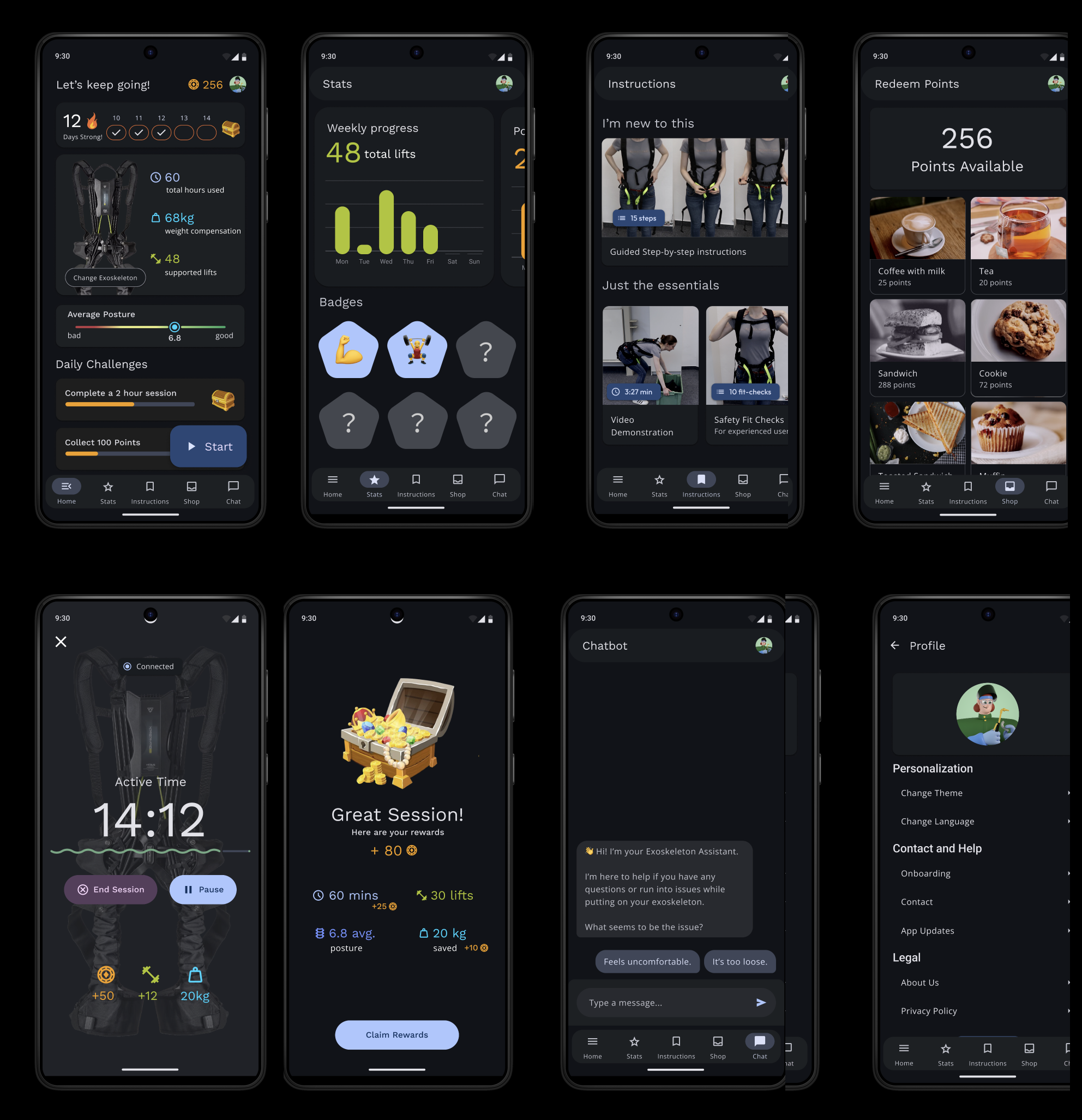
Warehouse workers equipped with industrial exoskeletons face two compounding challenges: low adoption rates and difficulty learning how to correctly don the devices. Without proper usage, the health and productivity benefits of exoskeletons go unrealized, and incorrect donning can even lead to discomfort or injury. The goal was to design an app that would make workers want to use exoskeletons regularly and give them the confidence to wear them correctly from day one.
The proposed solution centered on three pillars:
Gamification
Drive engagement and motivation through behavioral mechanics.
Instructions
Simplify the donning process with clear guidance.
Visualization
Track activity and progress over time.
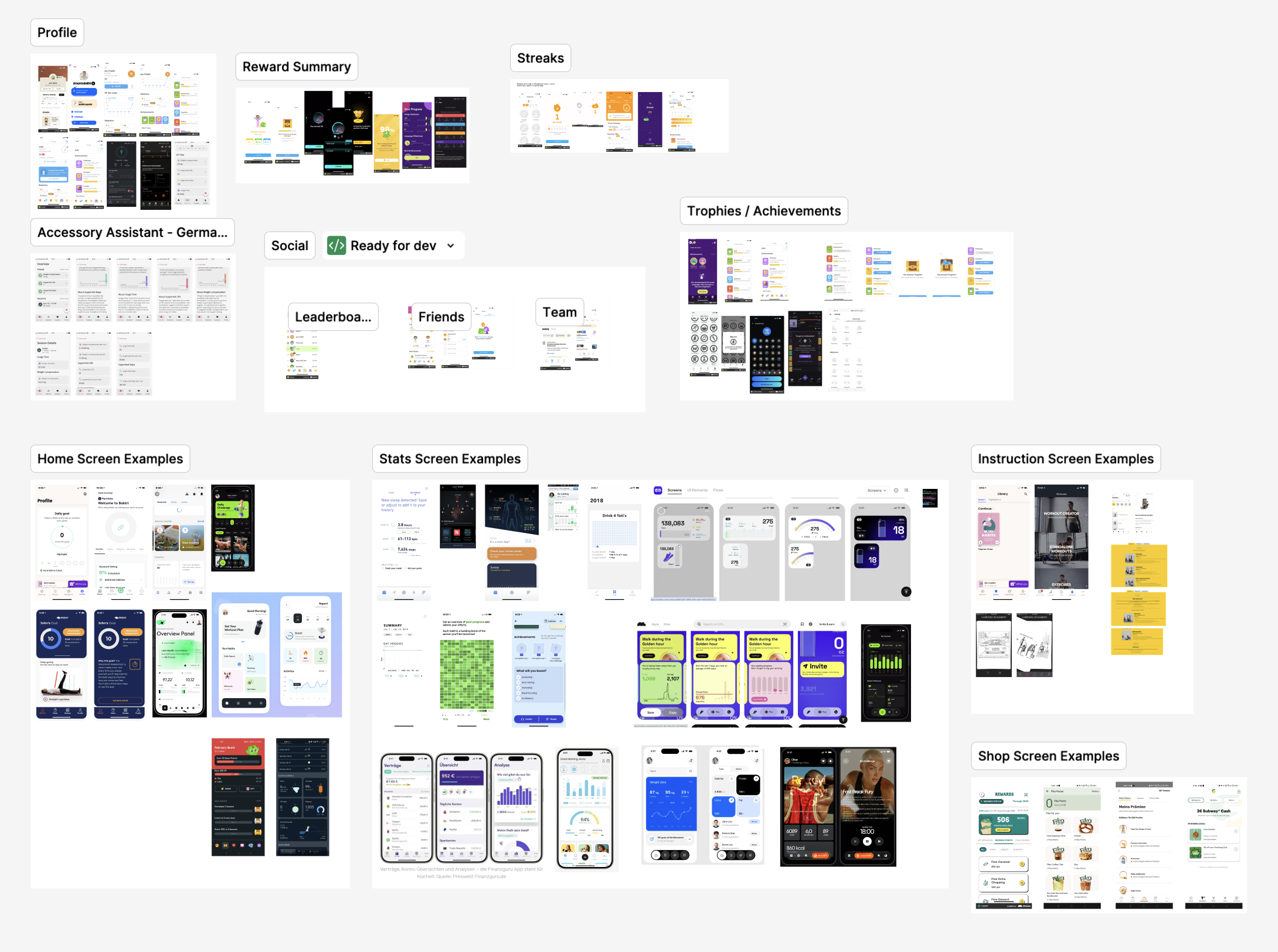
The research phase began with a broad exploration of motivation and engagement strategies across analogous domains — fitness trackers, personal training platforms, and rehabilitation/physical therapy apps. This helped identify what drives consistent behavior change in contexts where users interact with physical tools or routines.
From there, a gamification audit was conducted across several consumer and enterprise apps to catalog which gamification elements appear most frequently, in what contexts they're used, and how they're visually implemented. This produced a categorized library of gamification strategies mapped to five key phases:
- •Onboarding:Reducing first-use friction and building early confidence
- •Learning:Guiding users through new skills (like donning)
- •Skill Development:Reinforcing correct technique over time
- •Motivation:Sustaining engagement beyond the novelty phase
- •Error Prevention:Nudging users away from incorrect behavior
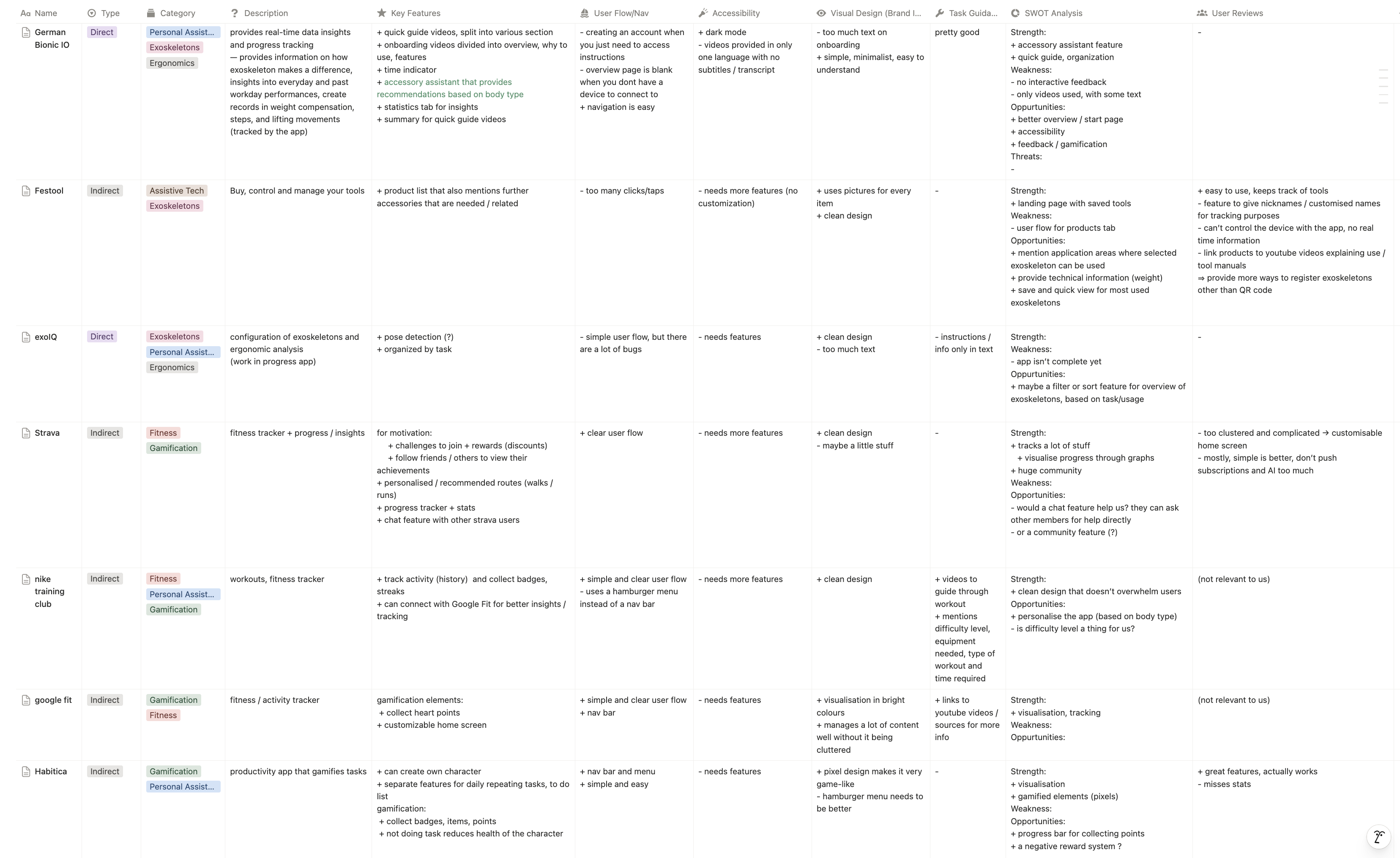
This was followed by a competitive analysis of 7 direct and indirect competitors, supported by a SWOT analysis for each, to identify gaps and opportunities specifically relevant to the warehouse and industrial wearable space.
With research insights in hand, the team held several collaborative sessions with the development team and supervisor to align on what features, content, and actions the app needed to support. To make sense of this information, we conducted a card sorting exercise followed by establishing the information architecture (IA).
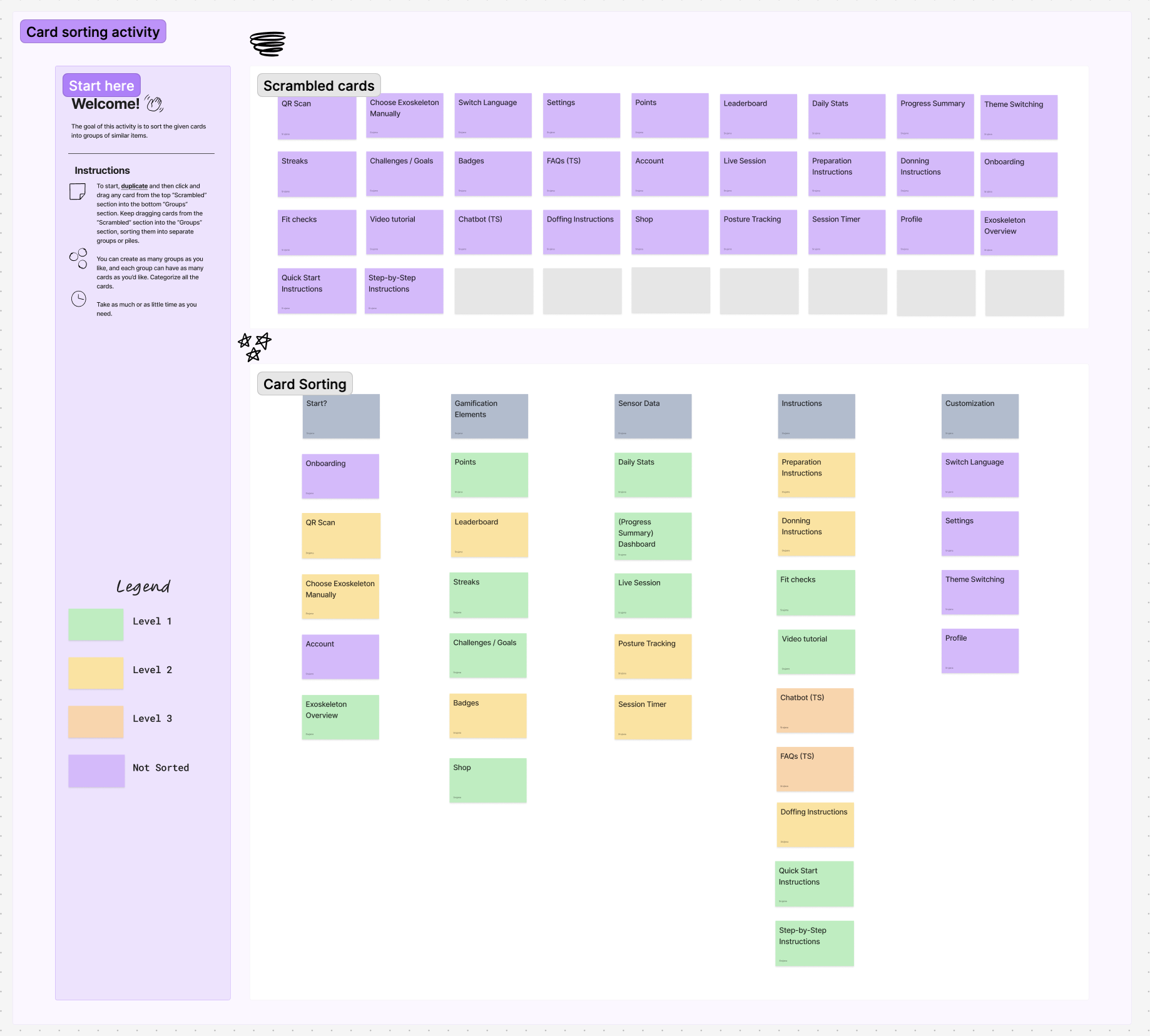
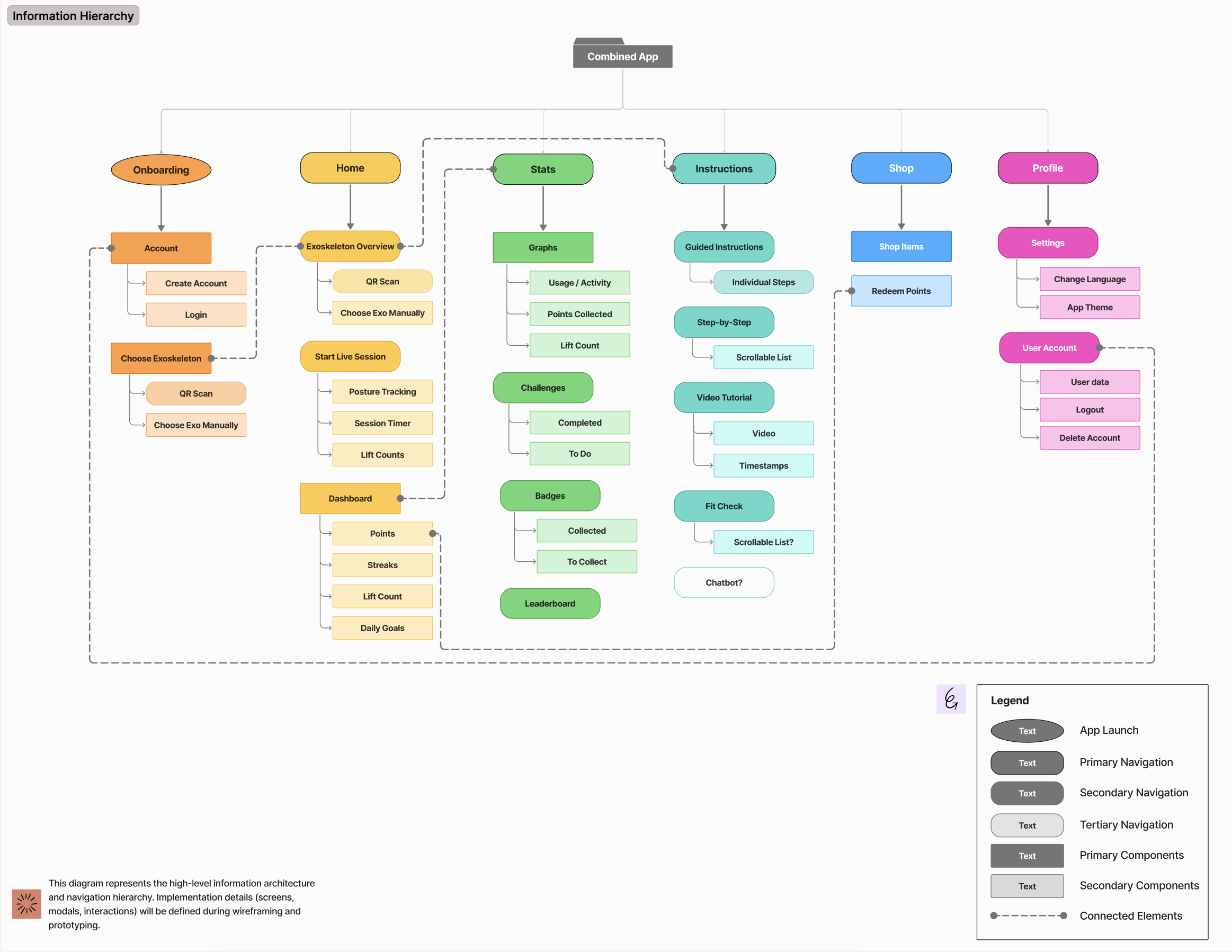
The IA laid the foundation for a comprehensive user flow, mapping every path a warehouse worker might take through the app, from first launch to daily check-ins.

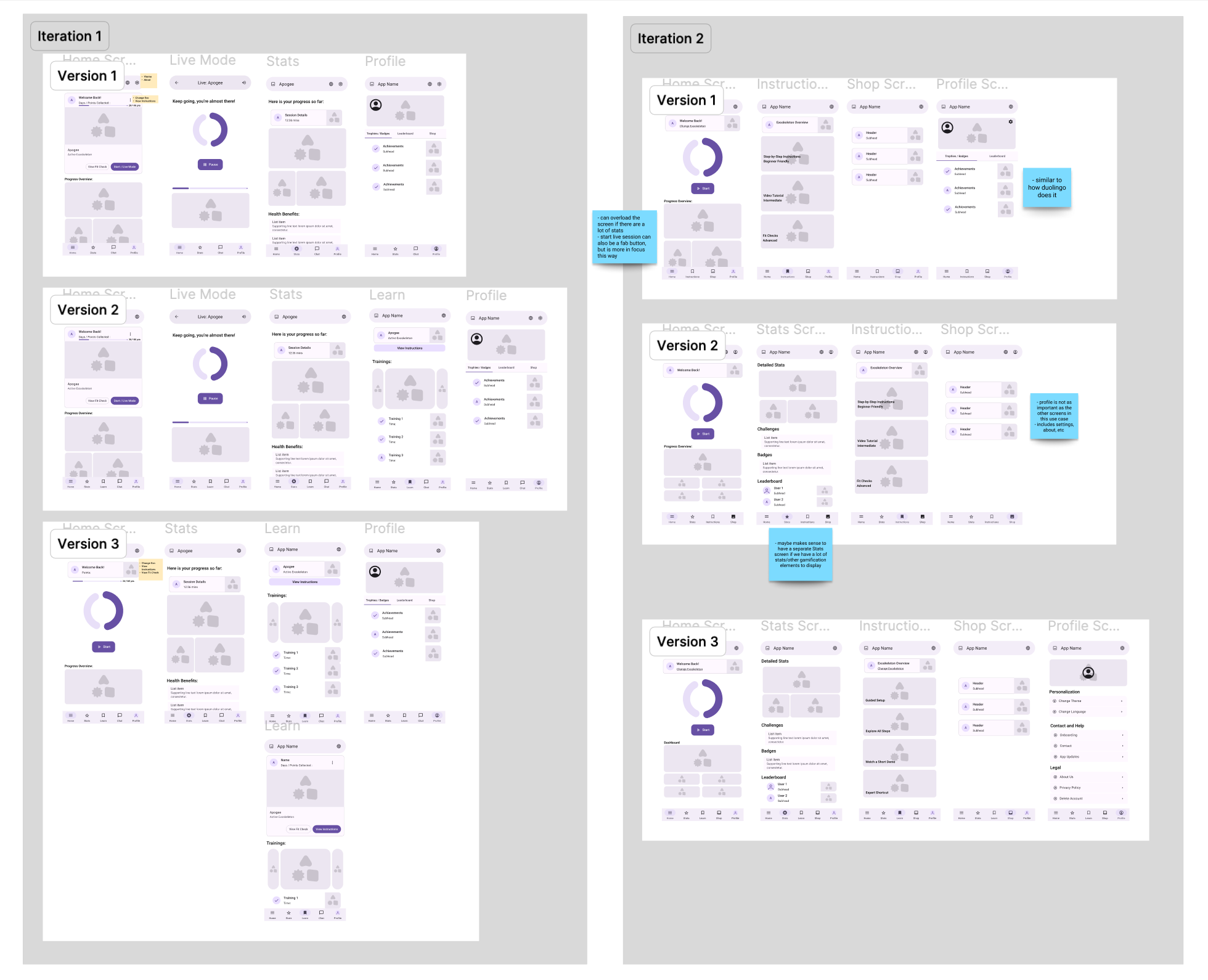
With a clear structure in place, the design process moved into low-fidelity wireframes focusing on layout logic and navigation. Once validated, the design progressed to high-fidelity mockups across multiple iterations, incorporating gamification mechanics, instructional content flows, and activity dashboards.
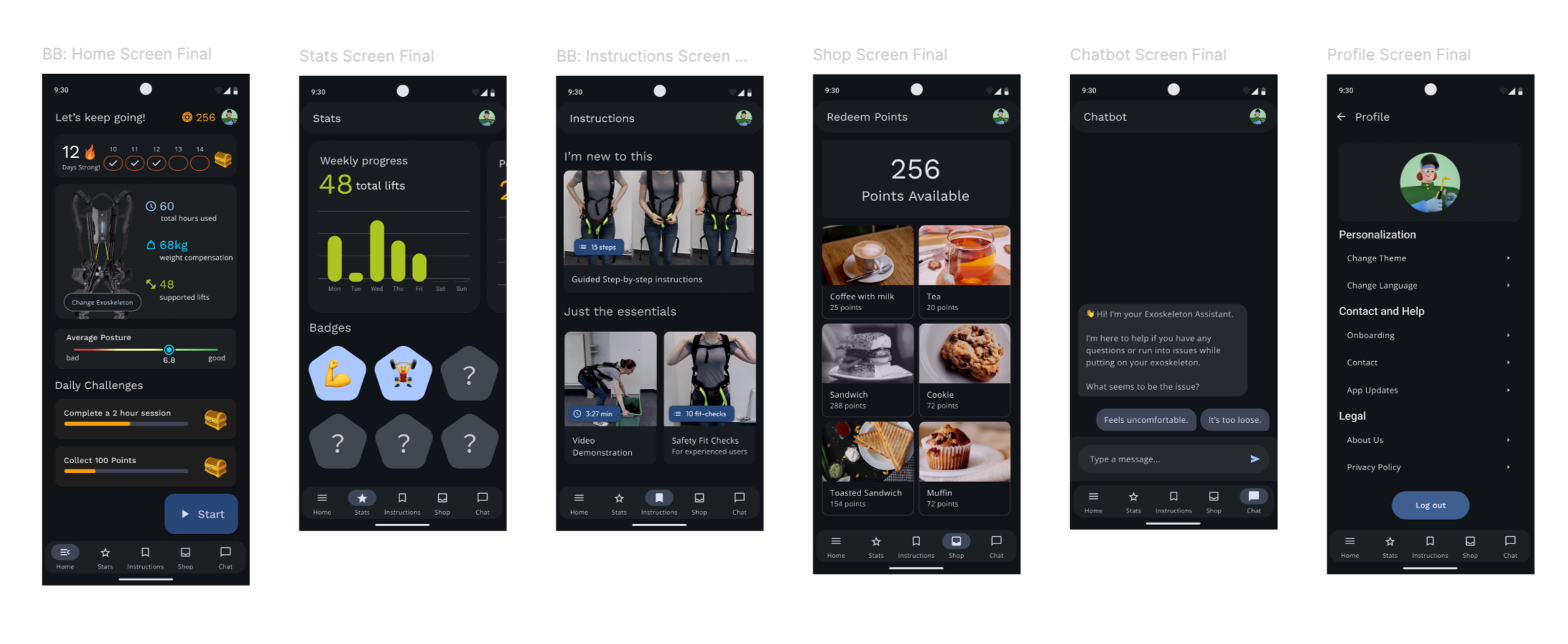
Beyond the design deliverables, the work extended into the development phase — contributing to the creation of Kotlin UI composables to ensure the design was faithfully translated into the product. This hands-on involvement in the handoff process helped bridge the gap between design intent and implementation reality.